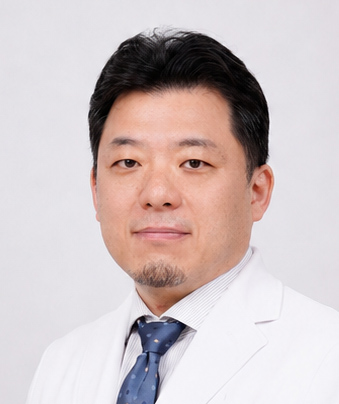
Brief Introduction
Yosuke Inoue is Professor of Division of Hepato-Biliary-Pancreatic Surgery, Department of Surgery, Teikyo University, School of Medicine. He completed his undergraduate degree, medical school, and a Ph.D. at Tokyo University. Over last 26 years, he has been engaged in multidisciplinary treatment of HPB cancers and development of sophisticated HPB surgical techniques regardless of open, laparoscopic, and robotic fields. He has published more than 320 articles (English and Japanese) related to surgical skills, perioperative managements, and oncological treatments of HPB diseases.
Specialty
Hepato-Biliary-Pancreatic surgery, Robotic surgery, Laparoscopic surgery, Multidisciplinary treatment for hepatobiliary-pancreatic cancers.
Education
- 1994-2000: Medical School: The University of Tokyo, Tokyo, Japan
- 2005-2009: Graduate School: The University of Tokyo, Tokyo, Japan
Experience
- 2000-2001: Resident, Department of Surgery, the University of Tokyo Hospital, Tokyo, Japan
- 2001-2004: Department of Surgery, the Hitachi General Hospital, Hitachi, Japan
- 2004-2008: Hepato-Biliary-Pancreatic Surgery Division, Department of Surgery, the University of Tokyo Hospital, Tokyo, Japan
- 2008-2009: Department of Surgery, Tokyo Metropolitan Bokutoh Hospital, Tokyo, Japan
- 2009-2012: Hepato-Biliary-Pancreatic Surgery Division, Department of Surgery, the University of Tokyo Hospital
- 2012-2020: Division of Hepato-Biliary-Pancreatic Surgery, Cancer Institute Hospital
- 2020: Vice director, Division of Hepato-Biliary-Pancreatic Surgery, Cancer Institute Hospital
- 2026: Professor, Department of Surgery, Teikyo University, School of Medicine
Selected Publications
- Inoue Y, Kobayashi K, Kato T, et al. Current Status and Future Perspectives of Superior Mesenteric Artery Dissection in Robotic Pancreaticoduodenectomy: A Scoping Review of Technical Variations in the Robotic Era. Journal of clinical medicine. 2025;14(17):6084.
- Inoue, Y.; Takamatsu, M.; Masugi, Y. et al. Blood Group Antigen Expression in Blood and Tumor in Relation to Survival Outcomes in Resected Pancreatic Cancer, Overall and by Adjuvant Chemotherapy Regimens. Ann Surg Oncol 2025
- Kiritani S, Inoue Y, Sato T, et al. A left-posterior approach to the superior mesenteric artery during robot-assisted pancreaticoduodenectomy. J Hepatobiliary Pancreat Sci. 2025.
- Kobayashi K, Inoue Y, Takahashi Y. Efficacy of Robot-assisted Pancreaticoduodenectomy with Left Posterior Approach for Pancreas Head Cancer with Venous Invasion. J Gastrointest Surg. 2025.
- Irie S, Inoue Y, Oba A, et al. Technical Guidelines for Safe Mesojejunum Dissection During Pancreaticoduodenectomy: Unveiling Critical Techniques in a Complex Procedure. Ann Surg Oncol. 2024.
- Kobayashi K, Inoue Y, Oba A, et al. Strategies for Recurrent Colorectal Liver Metastases Based on Prognostic Factors and Resectability: Potential Benefit of Multidisciplinary Treatment. Ann Surg Oncol. 2024.
- Kitano Y, Inoue Y, Kobayashi H, et al. Development of the Multiple Scope Transition Method in Robotic Pancreaticoduodenectomy. Surgical Endoscopy 2024
- Inoue Y, Sato T, Kato T, et al. Reproduction of modified Blumgart pancreaticojejunostomy in a robotic environment: A simple clipless technique. Surgical Endoscopy 2022 Jun 30.
- Inoue Y, Sato T, Kato T, et al. How Can We Optimize the Surgical View During Robotic-Assisted Pancreaticoduodenectomy? Feasibility of Multiple Scope Transition Method. J Am Coll Surg. 2022;235(4):e1-e7.
- Inoue Y, Saiura A, Yoshioka R, Ono Y, Takahashi M, Arita J, et al. Pancreatoduodenectomy With Systematic Mesopancreas Dissection Using a Supracolic Anterior Artery-first Approach. Ann Surg. 2015;262(6):1092-101.
Background: Robotic pancreaticoduodenectomy (RPD) has rapidly evolved with the development of robotic-specific surgical strategies. Thanks to the advice from the TVGH group and based on our experience with laparoscopic pancreaticoduodenectomy, we have implemented the left-posterior superior mesenteric artery-first approach (LPAA) as a central concept in RPD for pancreatic cancer. After 6 years of experience, this approach has matured into a standardized and reproducible strategy for precise SMA-oriented dissection, especially in pancreatic head cancers requiring meticulous mesopancreatic clearance.
Methods: Our RPD Principle comprises three strategies: optimal view angle, optimal major retraction, and dissection with both hands free.
For optimal view angle, a key technique is scope transition. By taking advantage of the flexible port configuration of the da Vinci Xi system, the scope can be inserted through different robotic arms according to the operative phase. This enables optimized visualization of otherwise difficult-to-see areas, including the posterior SMA, uncinate process, portal vein–superior mesenteric vein axis, and reconstruction field. We are currently refining this concept toward a more efficient and quicker scope transition method, aiming to reduce unnecessary instrument exchange and improve procedural flow.
For optimal major retraction, the LPAA is designed to expose the posterior and left aspect of the SMA early in the procedure, allowing accurate recognition of the dissection layer and secure control of the mesopancreas. Adequate major retraction is essential to create a stable operative field, while both robotic instruments are kept available for fine dissection around critical vessels.
Bipolar dissection with both hands free is used to maintain a bloodless field and to enable precise tissue handling.
Another current focus is the establishment of safe robotic portal vein resection and reconstruction. The key technical principles include thorough isolation of the tumor-bearing venous segment, preparation of a tension-free reconstruction field for end-to-end anastomosis, secure vascular control, and readiness for immediate conversion when necessary.
Conclusions: The left-posterior SMA approach has matured as a practical and reproducible method for robotic pancreaticoduodenectomy in pancreatic cancer. Our current technical development is directed toward two next steps: the safe establishment of robotic portal vein resection and reconstruction, and the development of a more efficient and quicker scope transition strategy. These refinements may further expand the potential of robotic pancreaticoduodenectomy while maintaining oncologic precision and surgical safety.